Storytelling
Stories Told Inside Families
Family stories are maintained collectively and serve identity rather than accuracy, which explains their fixed wording, their gaps and their resistance to correction.
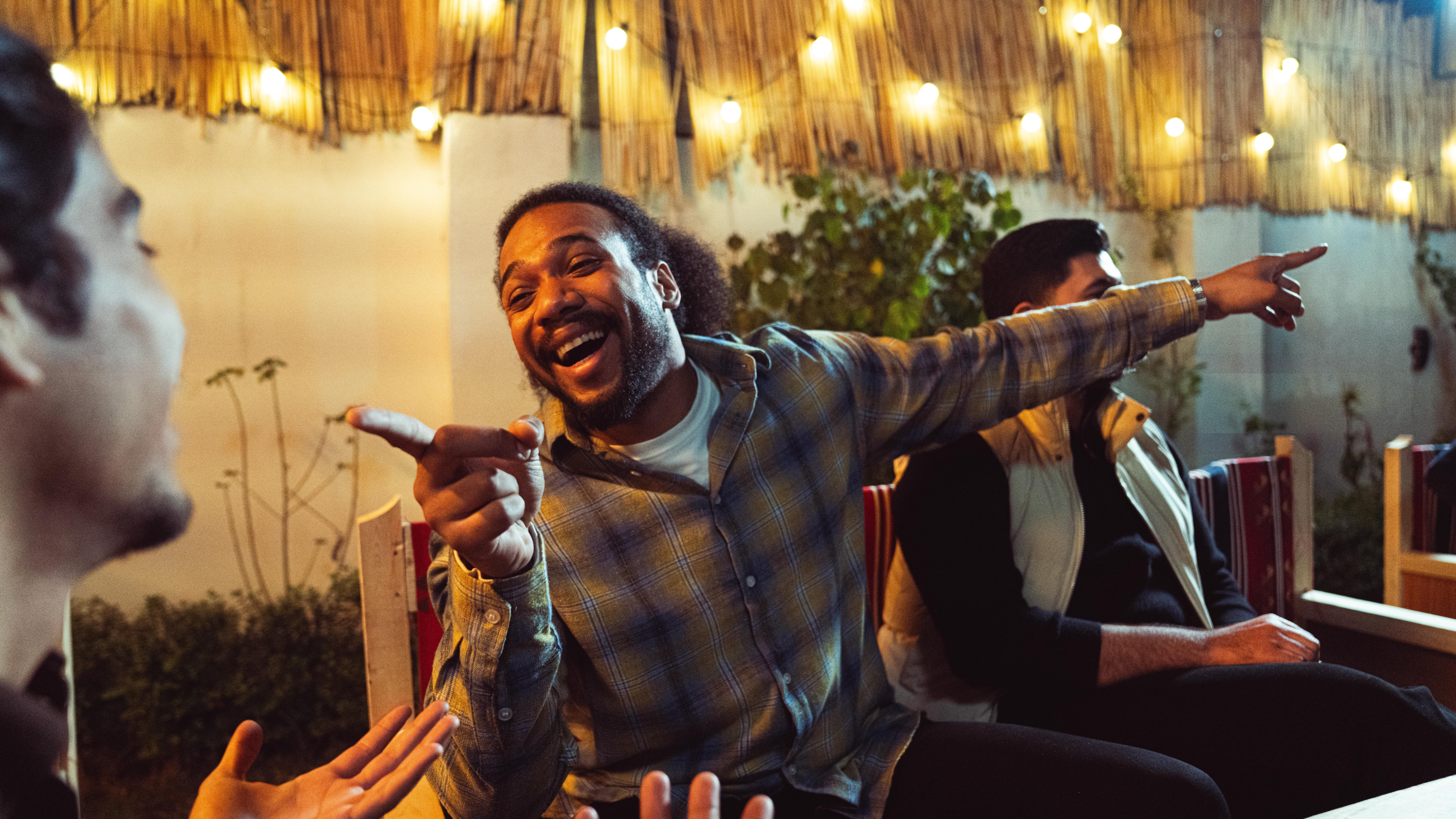
Most families have a small repertoire of stories told at gatherings for decades. They behave differently from other stories, and the differences are instructive.
The telling is collective
Family stories are rarely owned by one person. Several people hold parts, and a telling is assembled with interruptions, corrections and additions.
This makes the wording unusually stable, because deviations are challenged immediately by someone who remembers it differently.
The performance is part of the point. The corrections and the objections are as fixed as the story, and their absence would be noticed.
They do identity work
The stories a family keeps tend to say what kind of family it is: resourceful, unlucky, stubborn, funny about disaster.
Events that fit the picture are retold and reinforced. Events that contradict it are not preserved, and drop out of the repertoire within a generation.
The archive is therefore selective by design rather than by accident, which is why family history and family stories often diverge sharply.
Children learn the shape before the content
Young family members hear these stories long before they can follow them, and absorb the delivery, the timing and the expected reactions.
This is where many people acquire their sense of how a story is told, well before anyone teaches them anything about structure.
It also explains why families often share mannerisms in telling: the same pacing, the same kind of aside, the same way of arriving at a punchline.
Gaps are maintained deliberately
Alongside the stories that are told, most families have subjects that are known and not discussed, and the boundary is understood without ever being stated.
Younger members learn where the edges are by watching conversations turn, and the silence is transmitted as reliably as the stories.
When those gaps are eventually opened, usually by a death or by a determined descendant, the surrounding stories often need substantial revision.
Accuracy is not the standard being applied
Family stories drift like all oral material, and challenging the details rarely works because accuracy was never what they were for.
Their function is continuity: they connect people who never met, and give a scattered group something held in common.
The useful thing to do with them is to record who tells which version, since the variations preserve more about the family than a corrected single account would.
Recording is also the only defence against loss. A repertoire that has survived fifty years of retelling can disappear in a single generation once the main teller stops.
Also by Rafael Duarte
- Sounding like yourself in another languageLanguages
- Silence and what it doesVoice & Accent
- What your voice tells peopleVoice & Accent
- Your voice as you get olderVoice & Accent