Public Speaking
Speaking To A Room That Is Eating
Banquet and luncheon speaking fails for physical reasons rather than rhetorical ones, because the room is arranged, lit and staffed for dining rather than listening.
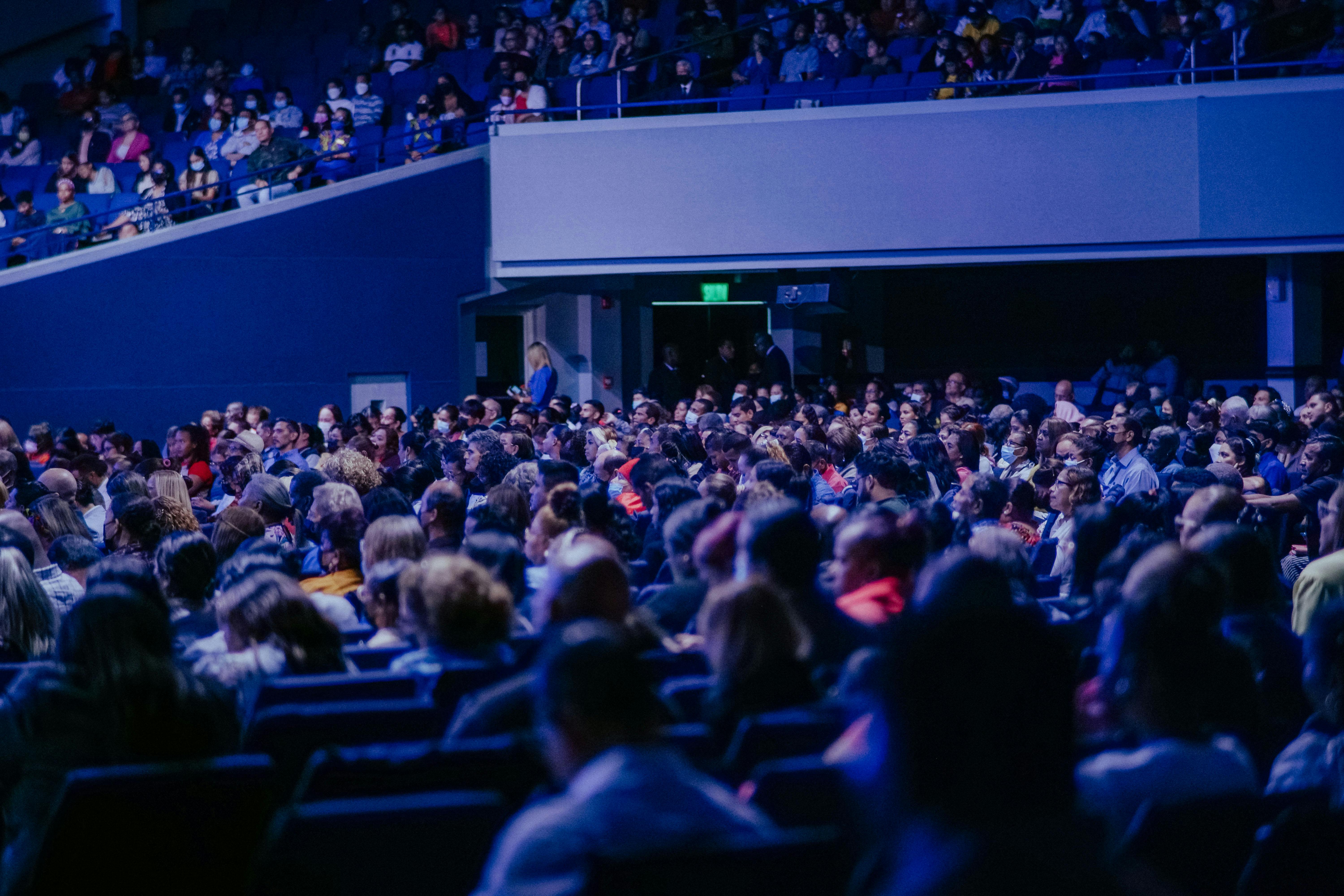
Speaking during a meal is a fixture of American conferences, awards dinners and fundraisers, and it is reliably the hardest room in ordinary professional life. The reasons are largely physical.
The room is built for tables, not sightlines
Round tables seat people facing each other, which means a substantial share of the audience has their back to the speaker and must turn to watch.
Turning is uncomfortable to hold, so those listeners drift back to facing their table within a few minutes regardless of interest.
Ballrooms are also wide rather than deep, putting large parts of the audience at severe angles where both sound and sightline are compromised.
Noise never stops
Service continues through most speeches. Plates, cutlery, glassware, chairs and staff movement produce continuous sound at frequencies that overlap with speech.
Hard surfaces and high ceilings add reverberation, which smears consonants and makes the room feel louder than the actual sound level suggests.
The practical consequence is that words at the ends of sentences vanish, so the speaker's usual habit of trailing off costs entire clauses.
Attention is already committed
People eating are performing a physical task with their hands and mouths, and they are seated with people they came to talk to.
The competing conversation is not rudeness; it is the reason many attendees came, and a speech that interrupts it starts from behind.
Programs that schedule the speech between courses, rather than over one, remove a large part of the problem before the speaker says anything.
The physical state of the audience works against you
Late in an evening meal an audience is warm, seated, fed and often has been drinking, which is a combination that lowers alertness.
Dimmed lighting for atmosphere reduces it further, and a speaker lit brightly while the room is dark loses the ability to read faces at all.
None of this can be argued away from the podium, which is why the adjustment has to be made in what is prepared rather than in delivery.
What survives these conditions
Short works. A talk built to run ten minutes lands where one built to run thirty is abandoned by the room partway through.
Structure has to be audible: named sections, repeated phrases and clear transitions let a listener who looked away for a minute find their place again.
Anything requiring sustained continuous attention, including detailed arguments and slides with small text, belongs at a different event on the program.
Also by Esme Carrington
- The stories organisations tell about themselvesStorytelling
- Conversations with people much older or youngerConversation
- Speaking to cameraPublic Speaking
- Structuring a longer storyStorytelling