Conversation
Conversations That Happen Side By Side
Talking while walking or driving removes the pressure of eye contact and gives speakers something to do with pauses, which changes what gets said.
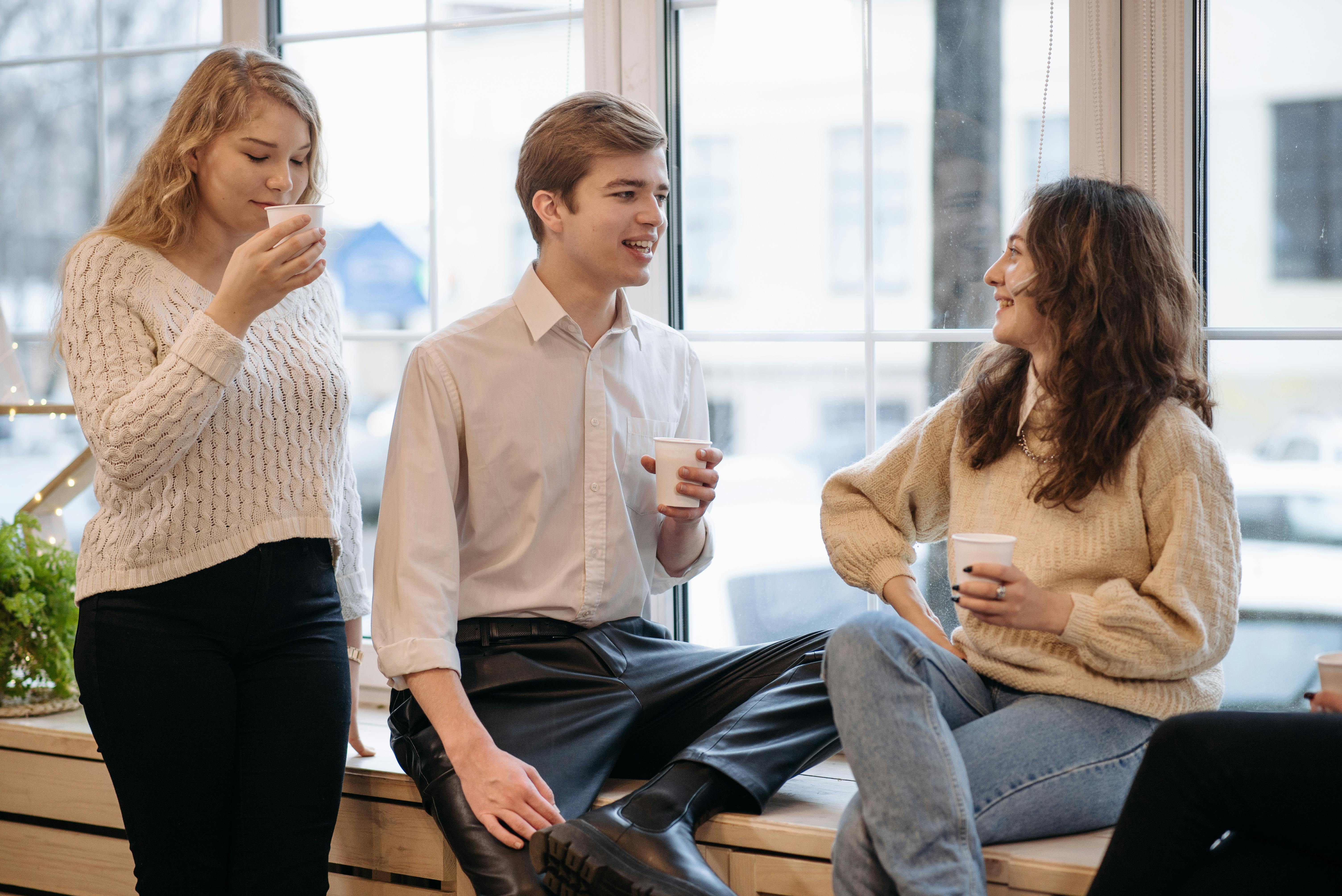
Some of the most substantial conversations people have take place in cars, on walks or while washing up. The setting is doing more work than it appears to.
Eye contact carries a cost
Face-to-face conversation involves near-continuous mutual gaze, which is demanding. People routinely break it while thinking, because looking and formulating compete for attention.
Side by side, that cost disappears. Both parties can look ahead indefinitely without it meaning anything, so more attention is available for the actual thinking.
This is why difficult subjects surface in cars. The absence of a face to read makes disclosure easier for the speaker and less charged for the listener.
Silence stops being a failure
In a seated conversation a long pause has to be explained, and both people feel responsible for ending it. That pressure shortens the time available to think.
When walking or driving, silence is absorbed by the activity. Nothing has gone wrong; the pair are simply doing the thing they were doing anyway.
Long pauses are exactly what complicated topics require. Removing the penalty on them changes which topics can be raised at all.
An external focus lowers the stakes
Shared activity gives both people somewhere else to direct attention, so a remark that lands badly can be absorbed without anyone having to react immediately.
It also supplies easy escape routes. Commenting on the route or the traffic pauses a subject without ending it, which makes hard subjects safer to start.
Parents and teenagers often discover this without naming it, which is why difficult family conversations so reliably happen during journeys.
Movement changes the rhythm of talk
Walking sets a physical tempo, and speech tends to settle into it. The pace is usually slower and more even than the pace of seated conversation.
There is also evidence in ordinary experience that movement loosens thinking. People report reaching conclusions on walks that they could not reach at a desk.
The combination produces conversations that move gradually rather than in the quick exchanges that a table encourages.
It suits some purposes badly
Anything requiring precision is worse side by side. Agreeing details, checking understanding and reading reactions all depend on the face that this format removes.
Emotional conversations that need visible response can also feel cold, since reassurance is carried largely by expression rather than by words.
The format is best for the exploratory stage, and many pairs move naturally to a table once the difficult part has been said out loud.
Also by Esme Carrington
- The stories organisations tell about themselvesStorytelling
- Conversations with people much older or youngerConversation
- Speaking to cameraPublic Speaking
- Structuring a longer storyStorytelling